 Ref: CFD-A24
Selected exhibit
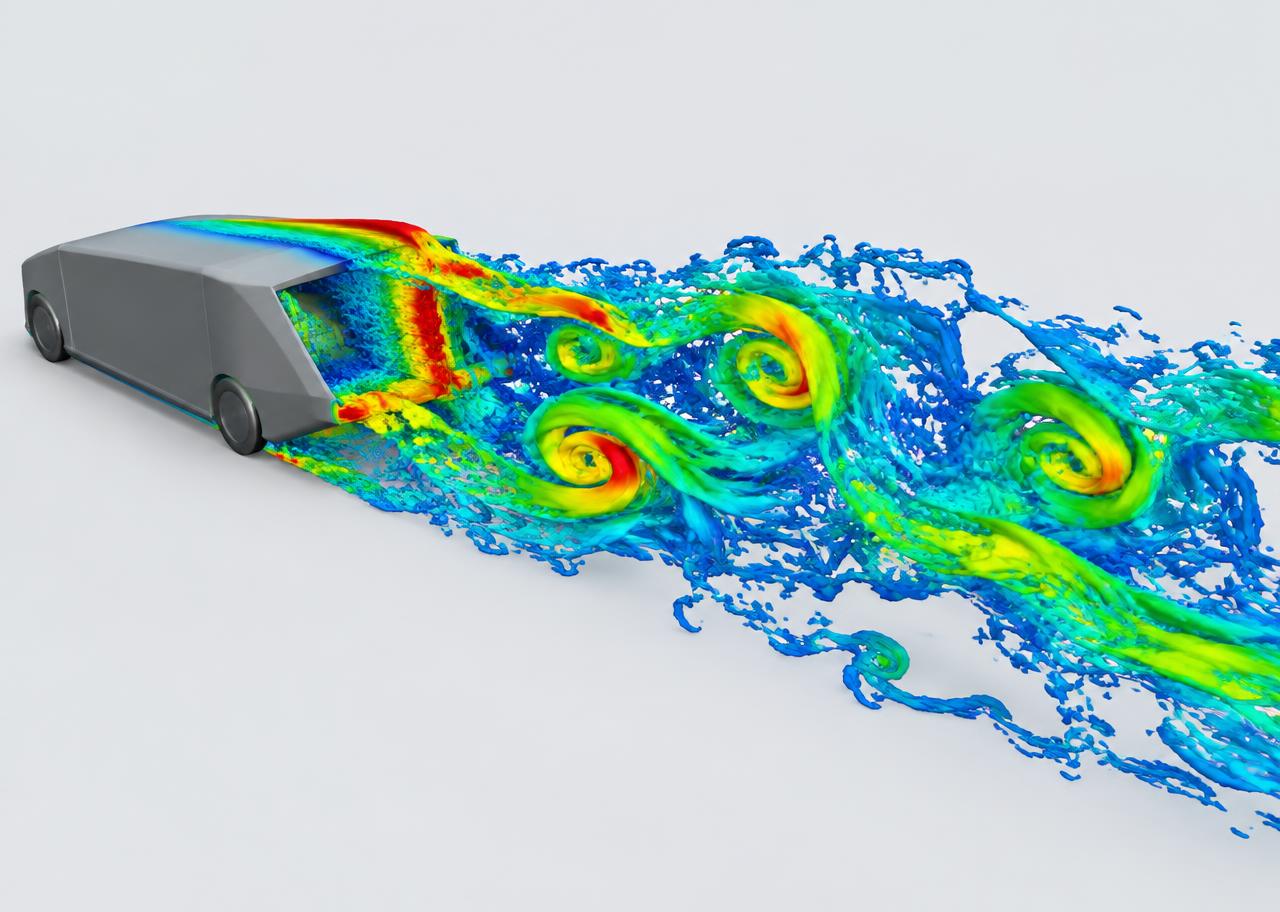
Ahmed-body wake resolved with Q-criterion
Fig. 2.1 — Instantaneous coherent structures in the near and far wake, coloured by local velocity magnitude.
GPU CFD · D3Q19 iLES · 3D
An indexed selection of structural, aerodynamic and thermal studies. Each plate corresponds to a case available in the working Studio.
Ref: CFD-A24Fig. 2.1 — Instantaneous coherent structures in the near and far wake, coloured by local velocity magnitude.
GPU CFD · D3Q19 iLES · 3D
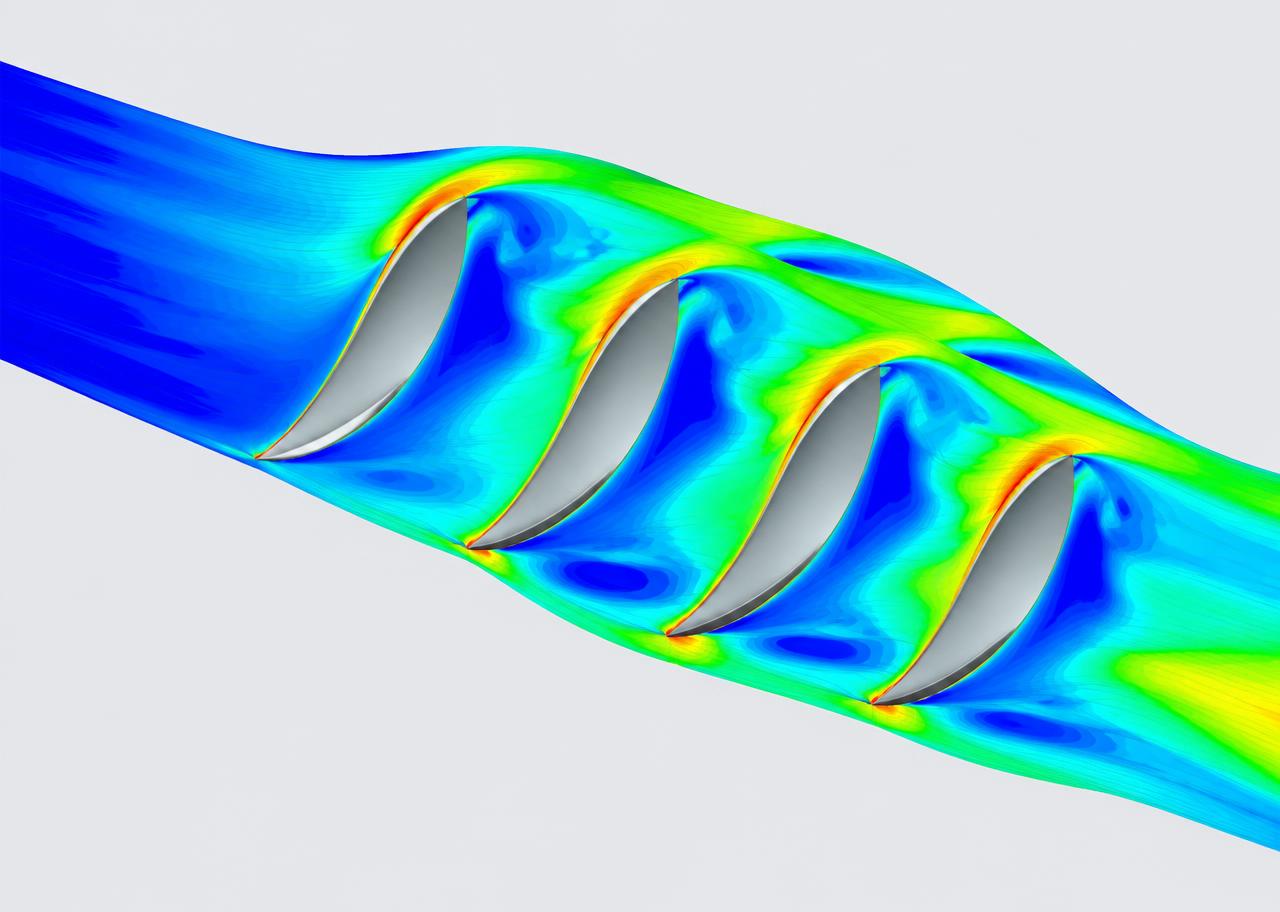 Fig. 2.2
Compressible flow · Loss coefficient
Passage flow and separation topology across a high-order turbine-blade mesh.
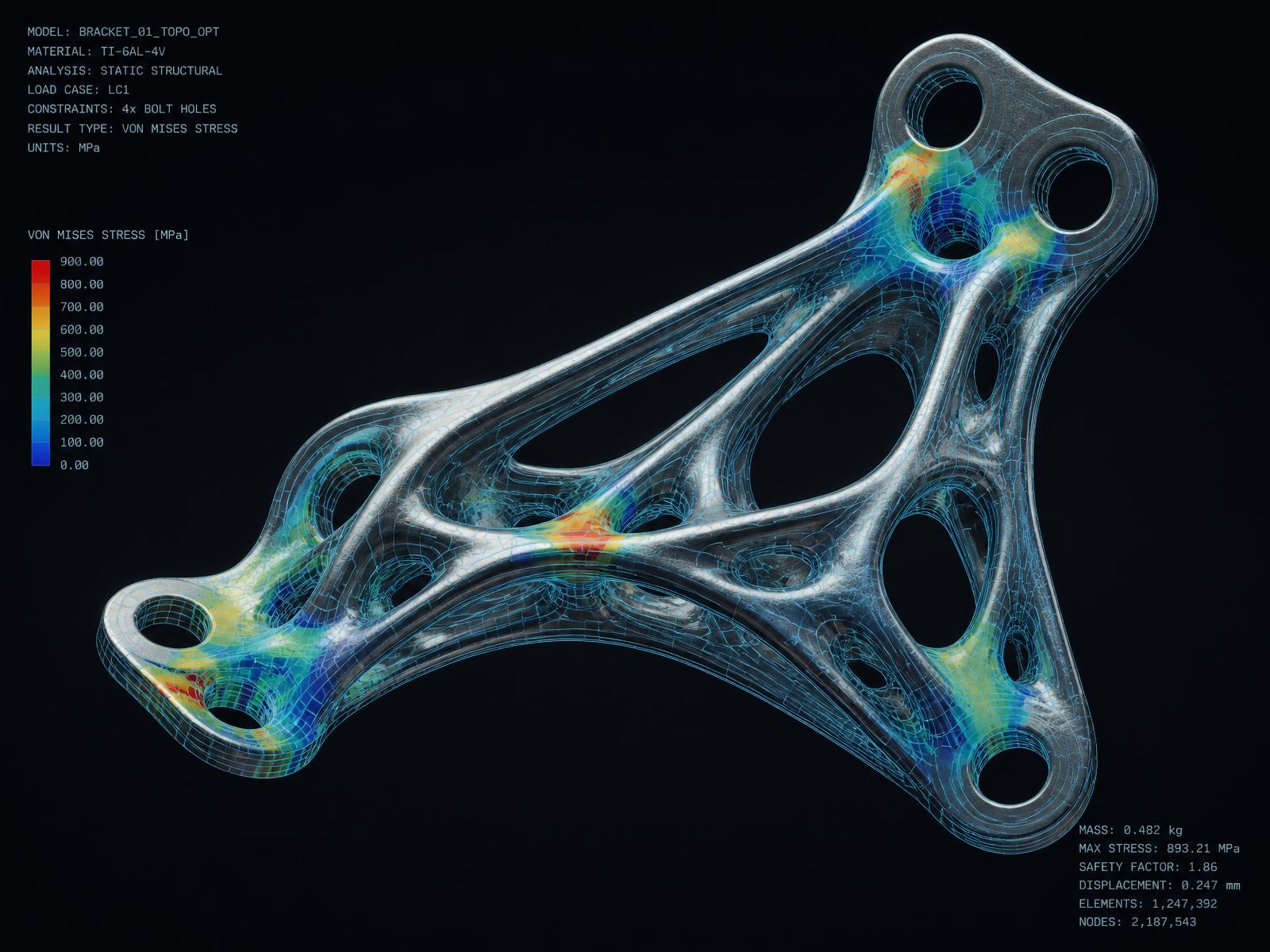 Fig. 2.3
SIMP · Stress recovery · P3 mesh
Material distribution under competing stiffness, mass and manufacturing constraints.
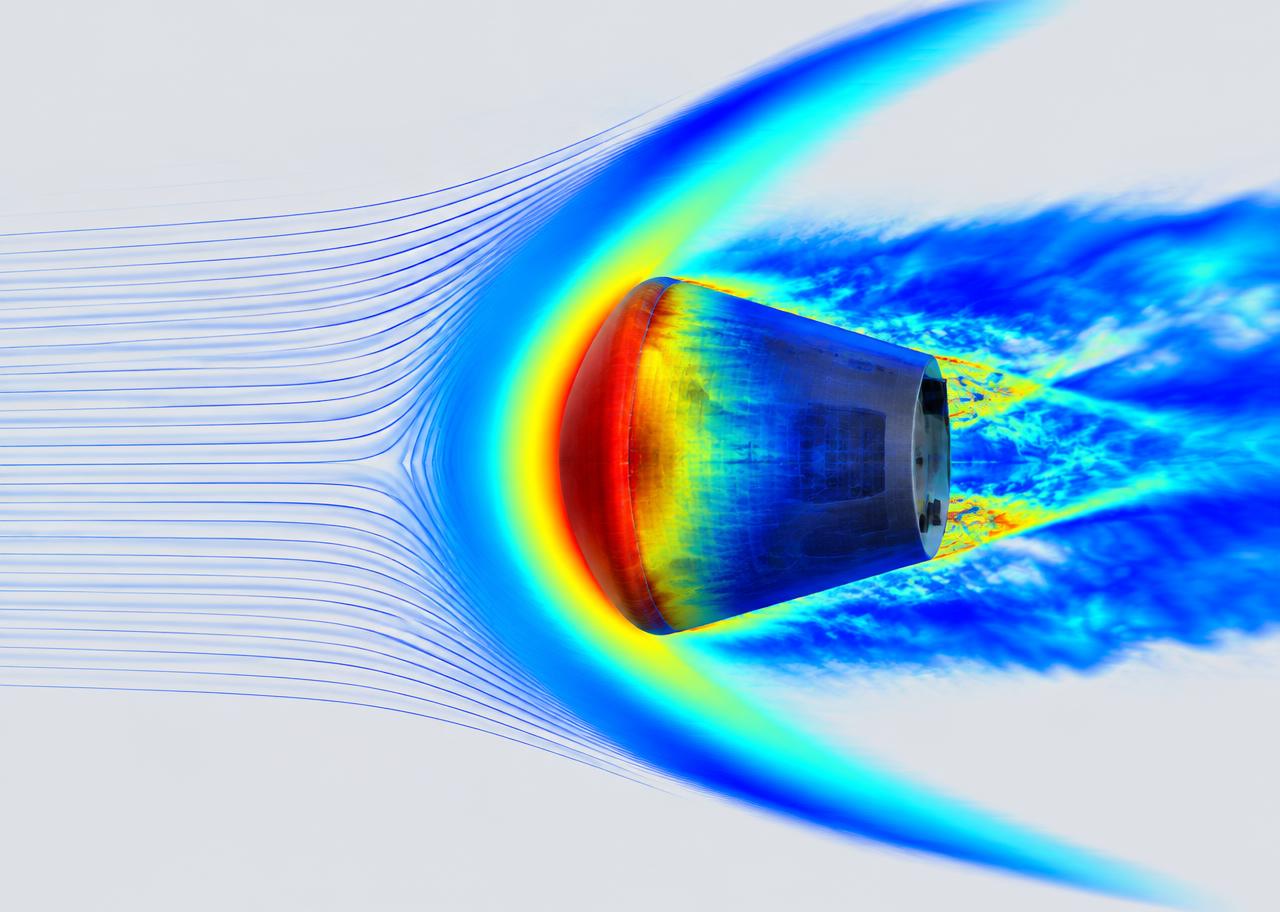 Fig. 2.4
Mach 20 · Fay–Riddell · 3D
Bow-shock structure and stagnation-region thermal loading during atmospheric entry.
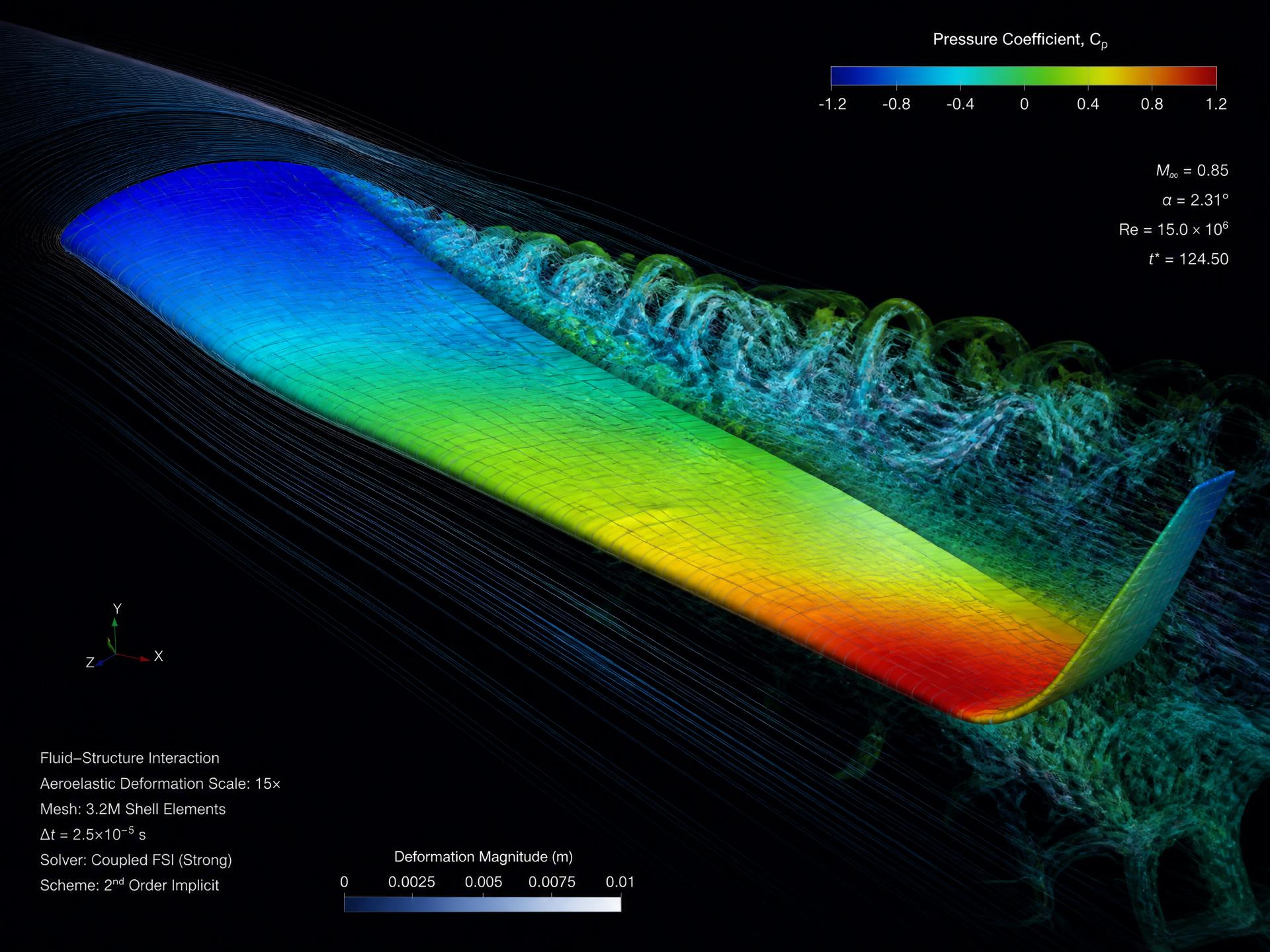 Fig. 2.5
Two-way FSI · 640 flight points
Coupled pressure and structural response used to recover flutter margins.
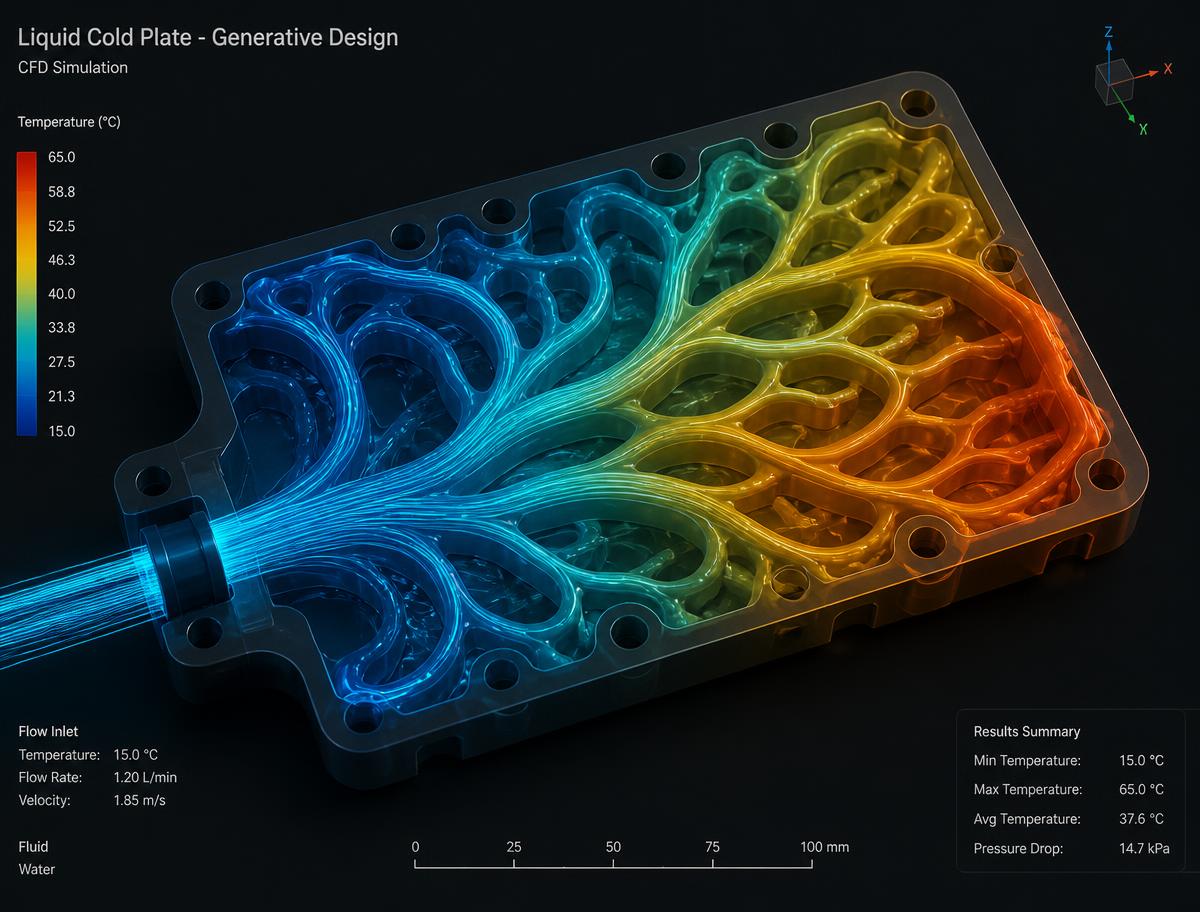 Fig. 2.6
Conjugate heat transfer · ΔT / Δp
Flow topology generated against simultaneous pressure-drop and temperature objectives.
Research case plates
Supplied reference figures retained with the cases they inform, spanning aerofoil wakes, retro-propulsion, turbulent vortex breakdown, automotive aerodynamics and co-axial flow.
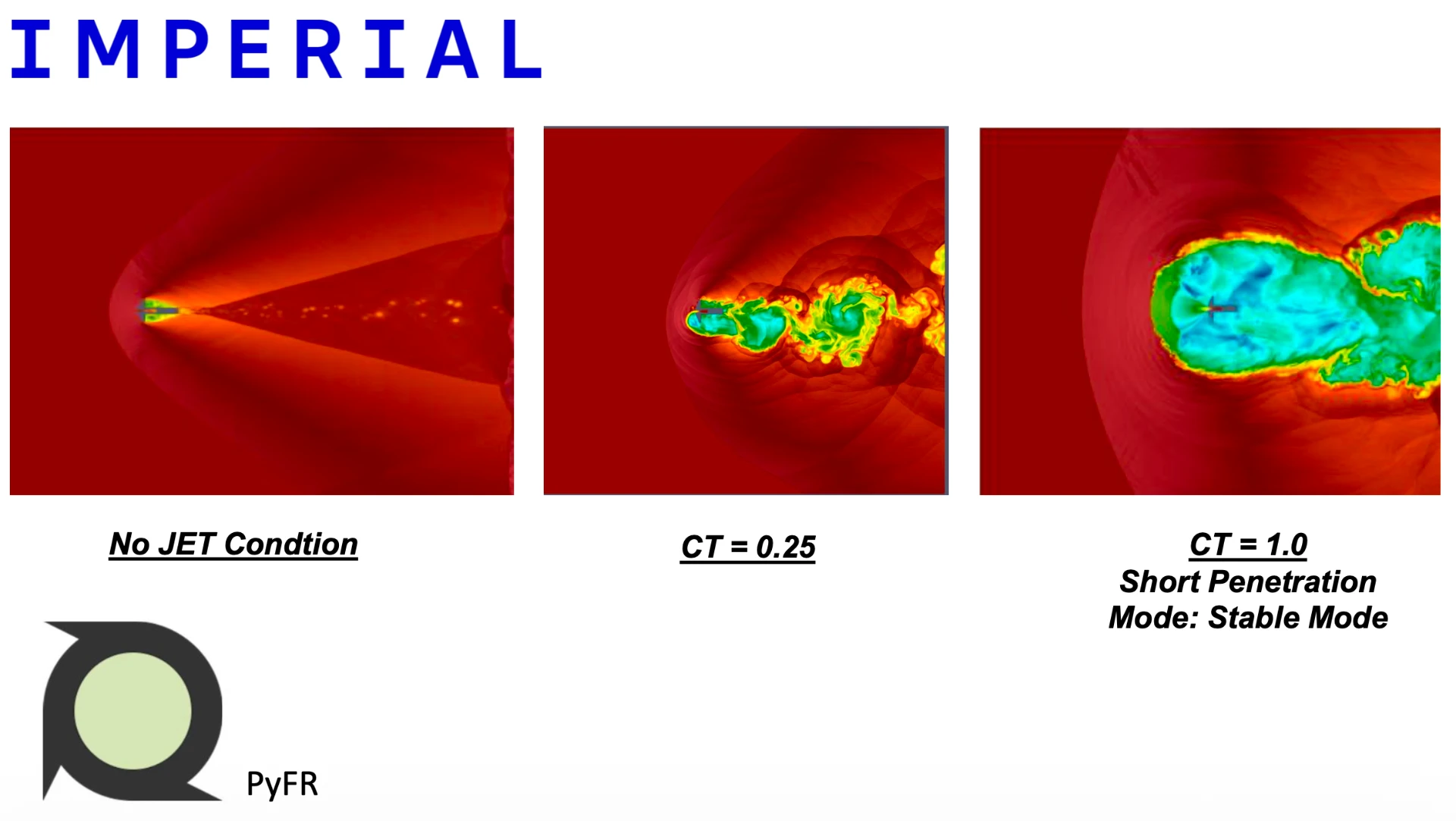
PyFR · High-order flux reconstruction · DNS
Comparison of the unforced flow with thrust-coefficient cases CT = 0.25 and CT = 1.0, showing shock–jet interaction and the short-penetration stable mode.
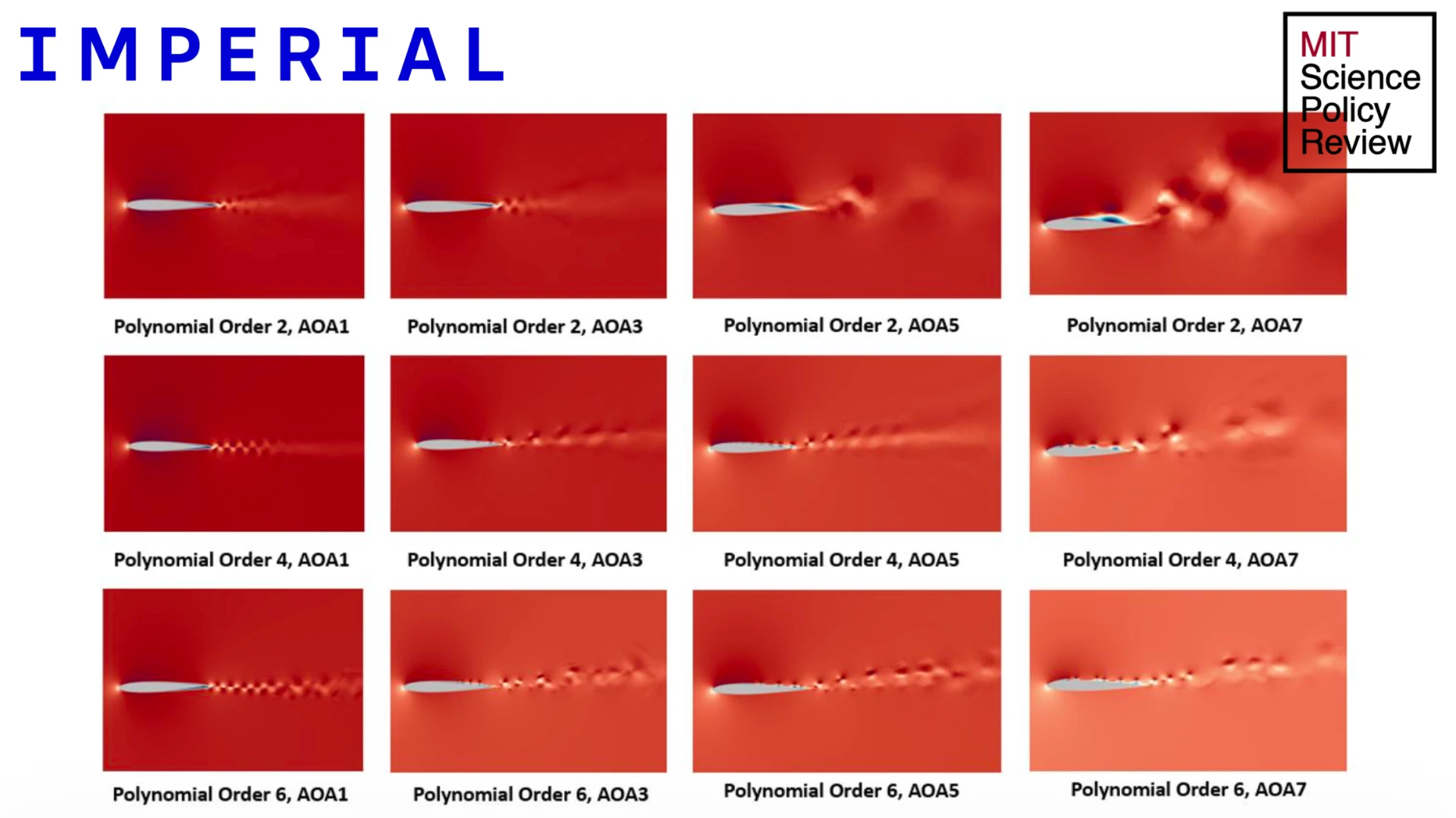
Nektar++ · P2 / P4 / P6 · AOA 1°–7°
A twelve-case comparison of resolved aerofoil wakes as polynomial order and incidence increase.
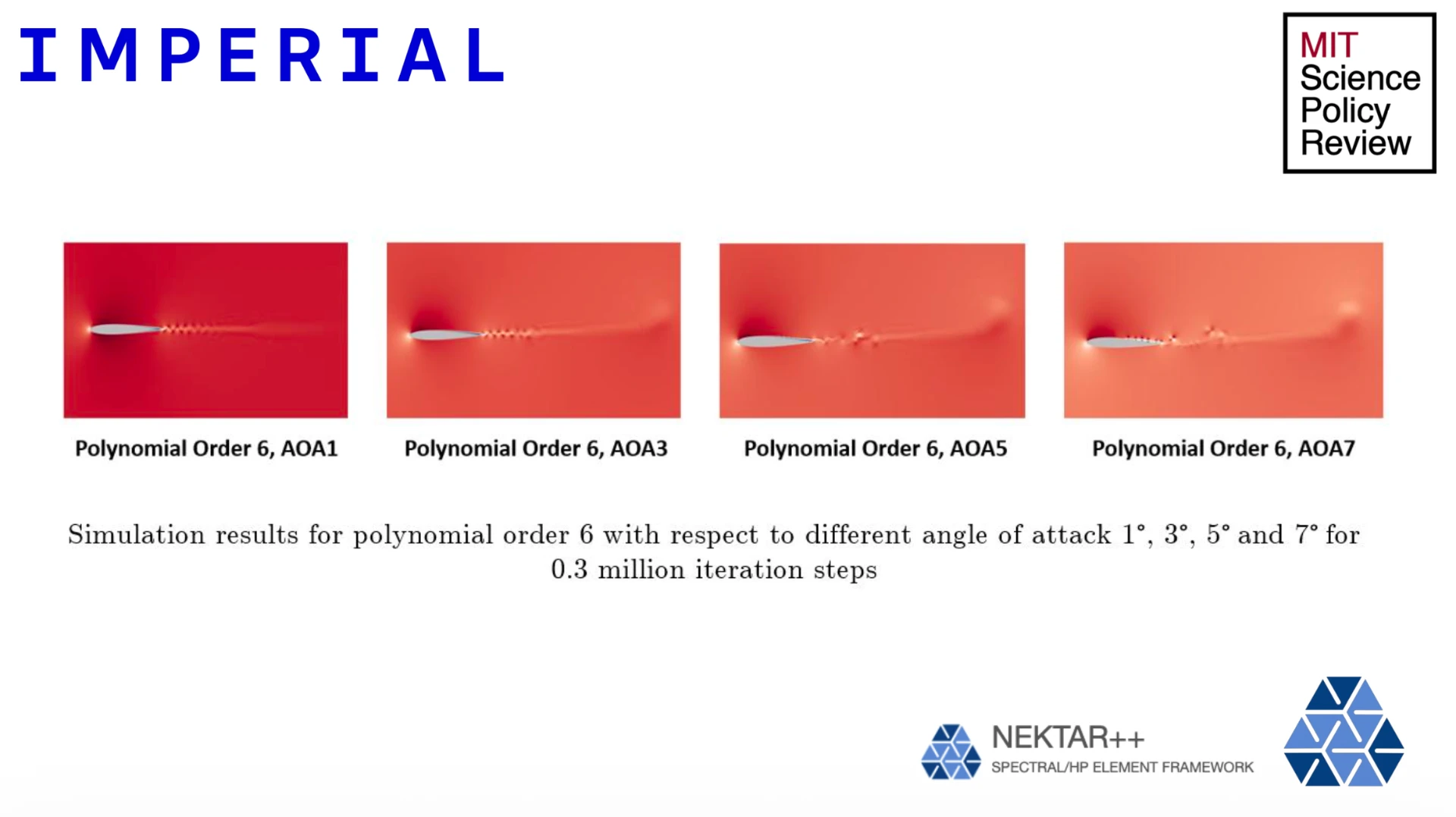
Nektar++ · P6 · 0.3 million iterations
High-order wake structures at 1°, 3°, 5° and 7° angle of attack after 0.3 million iteration steps.
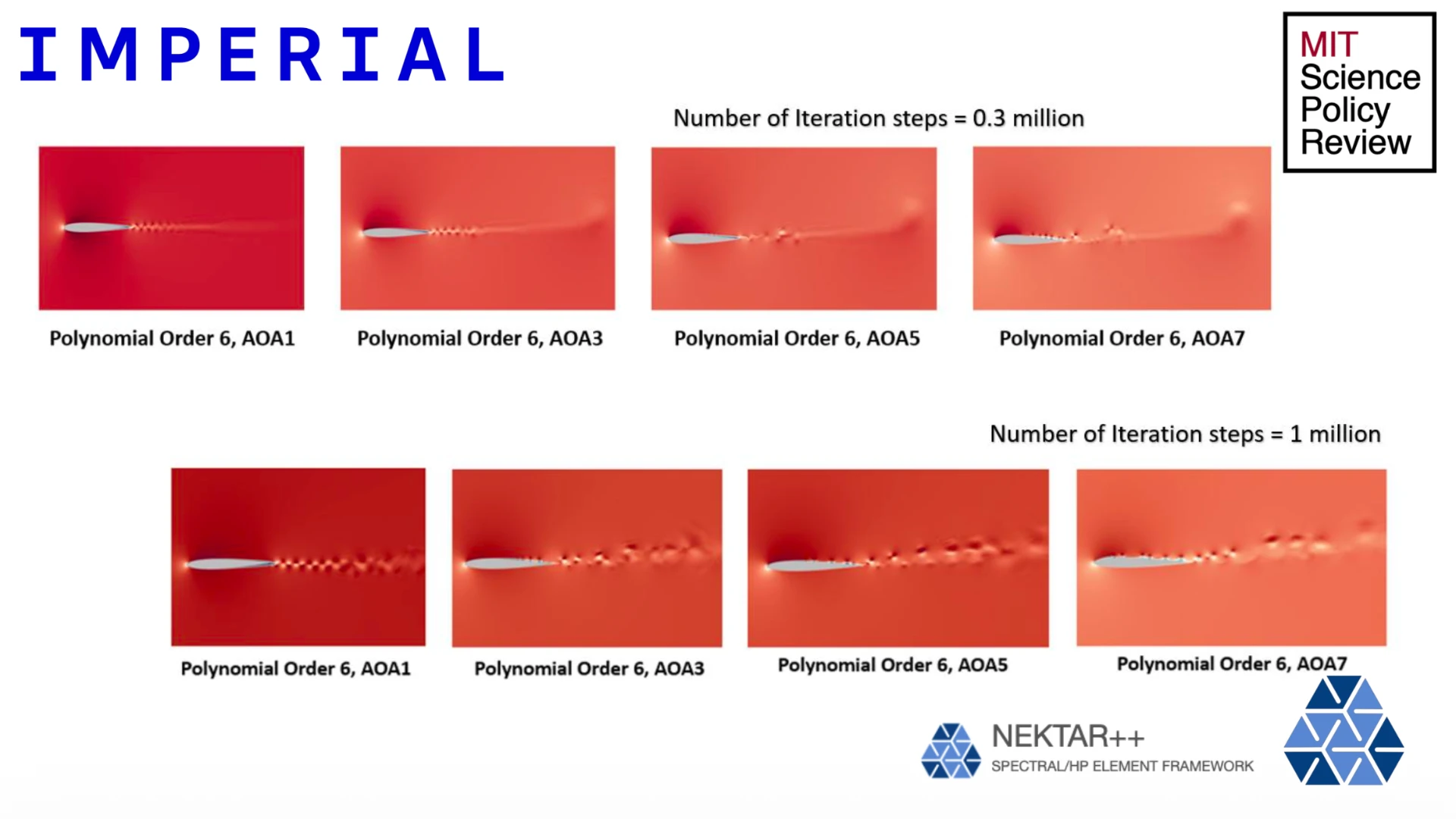
Nektar++ · P6 · 0.3M versus 1M iterations
The same incidence sweep compared at two integration horizons to expose the development and persistence of coherent wake structures.
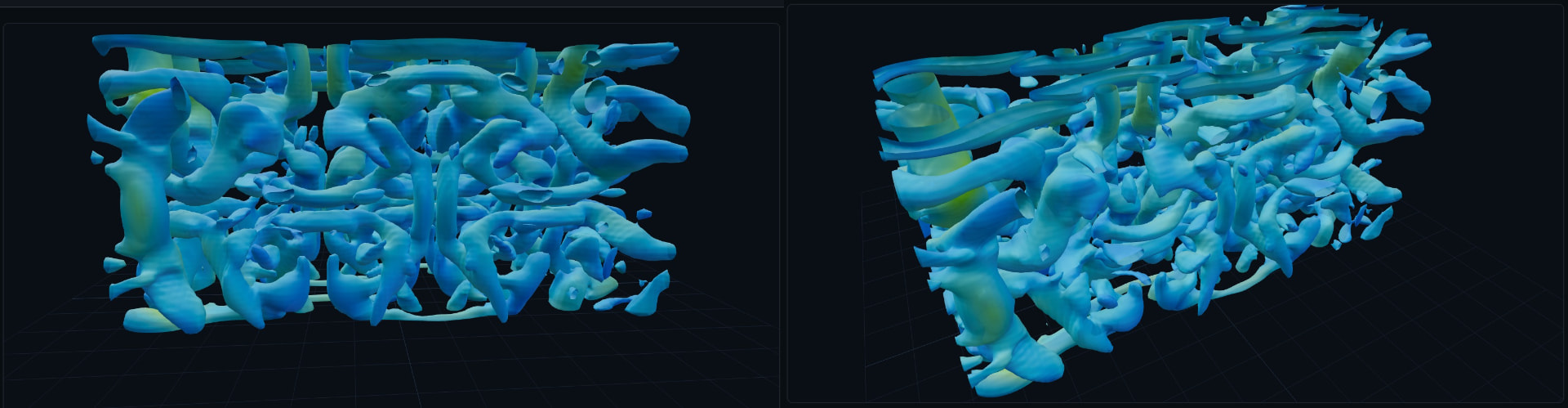
Q-criterion · Two viewpoints · Coherent vortex structures
Paired three-dimensional views of the late-stage vortex tangle retained for the Taylor–Green enstrophy-decay case.
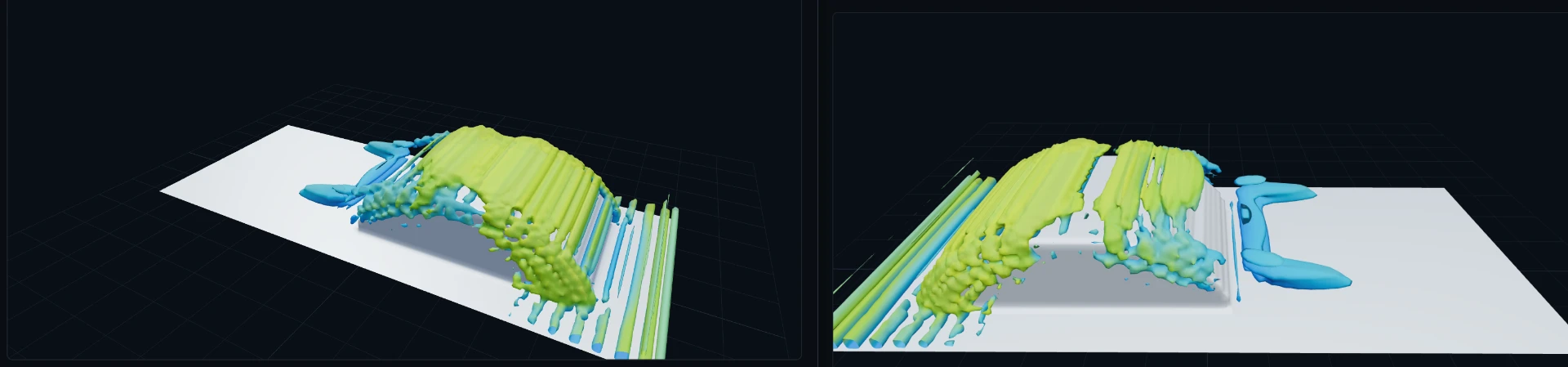
Q-criterion · Velocity colouring · Paired viewpoints
Two views of the resolved roof, C-pillar and near-wake vortex structures used to assess three-dimensional wake development.
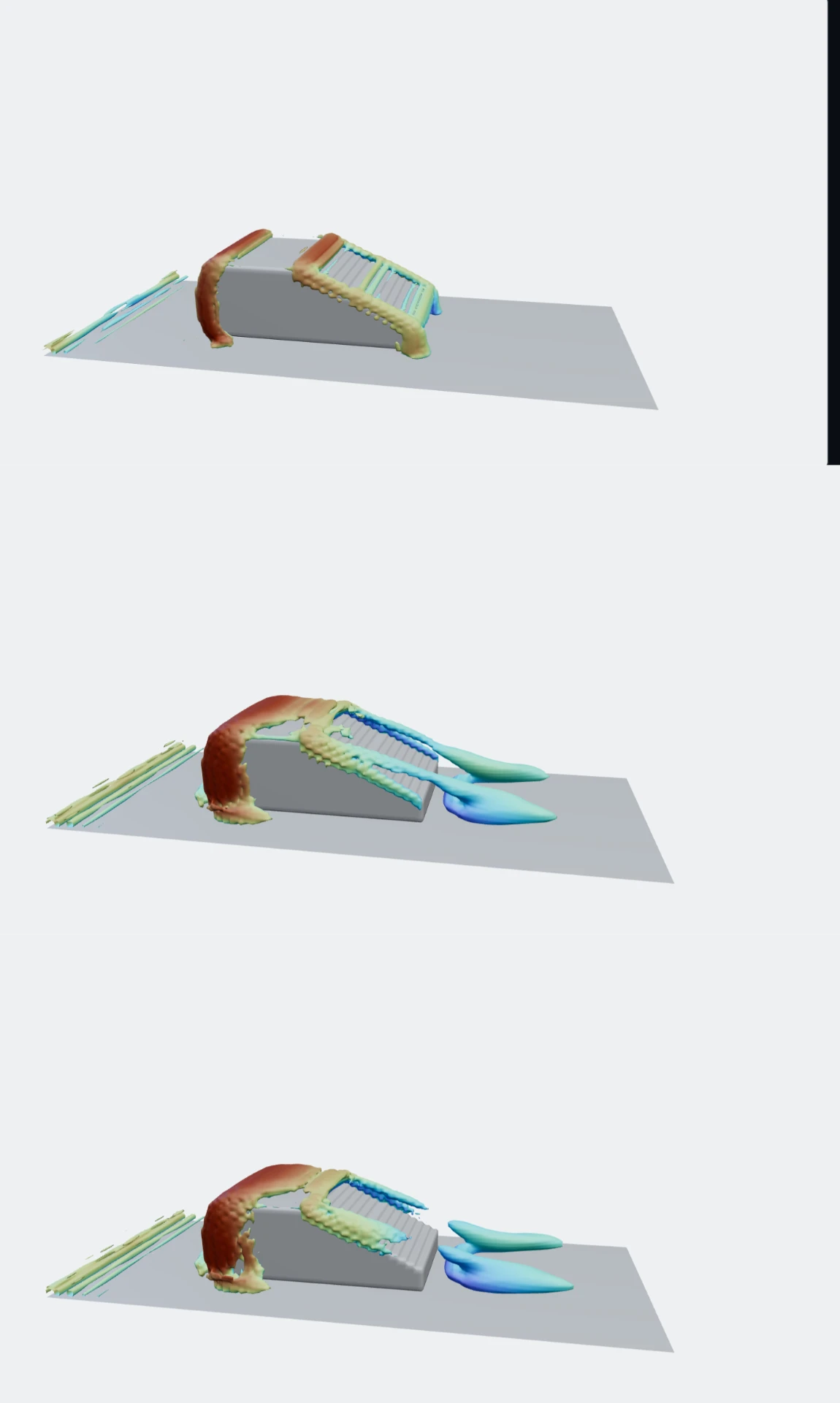
Three Q-levels · Separation topology · Far wake
A three-level comparison showing how the selected isosurface threshold changes the retained roof shear layer and trailing vortex pair.
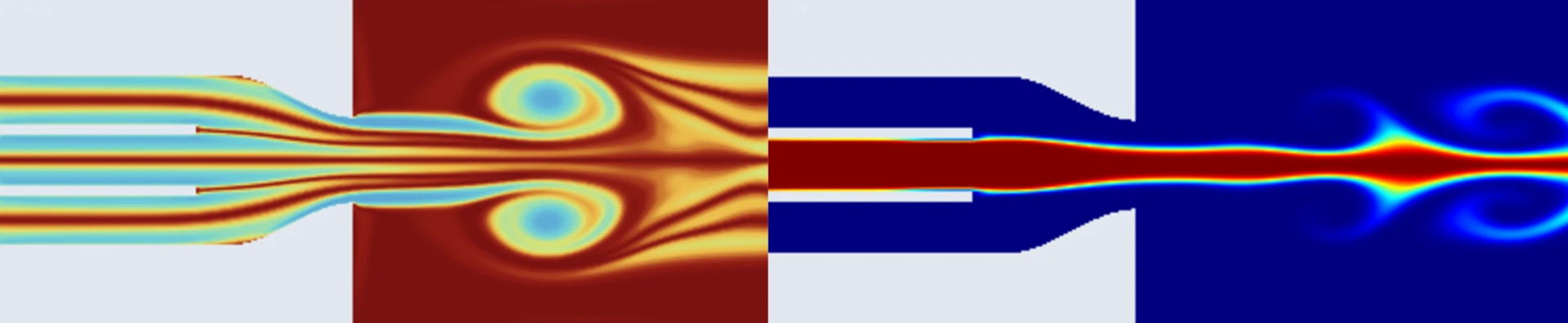
Velocity field · Mixing layer · Recirculation structure
Side-by-side scalar-field views of the core and sheath streams through the tapered nozzle and their downstream recirculation zones.
Working environment